The Complete WhaleClues Guide
Everything on the screen, decoded — from the watchlist panel to chart markers and the derivatives flow board. Use the contents on the left to jump to any section.
US Equity Indexes
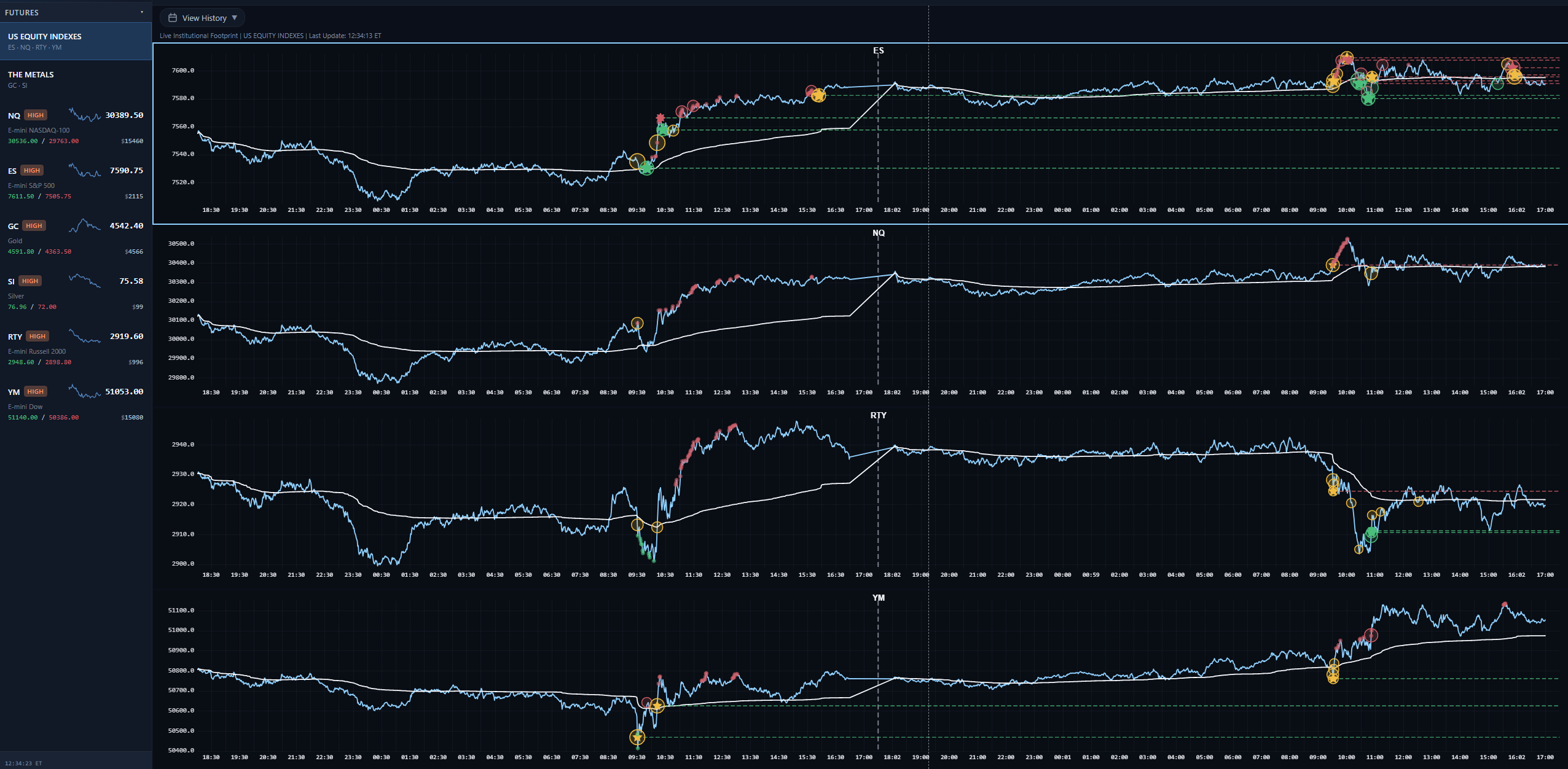
When you've subscribed to more than two of ES, NQ, RTY, YM, all four panels render together so you can scan them as one cohesive group. Each panel runs its own markers, walls and FLIP — the shared time axis lets you spot resonance, divergence, and lead/lag at a glance.
The Metals
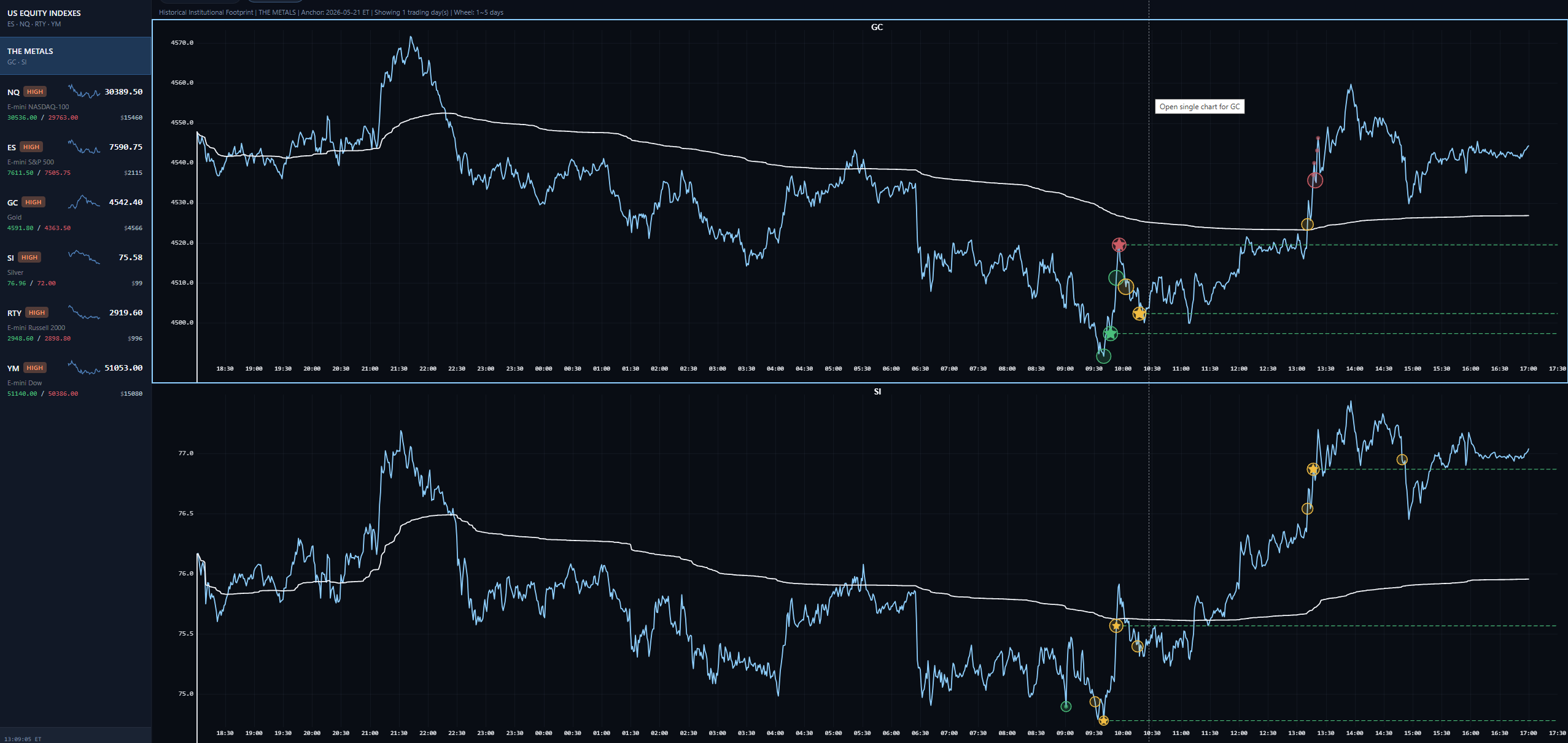
GC (Gold) and SI (Silver) are shown together in a single area — but only when you've subscribed to both of them. Each panel runs its own markers, walls and lines; the shared time axis makes lead/lag and divergence between the two metals easy to spot.
Instrument Tile
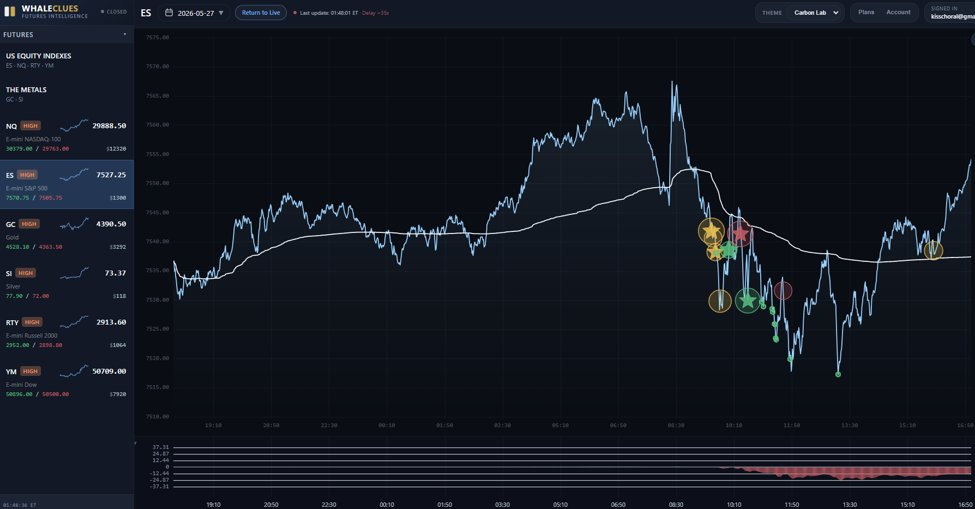
A tile is the at-a-glance summary for any single futures instrument. It shows the contract code (e.g. ES), the current session's HIGH / LOW pills, a mini sparkline of recent price action, the last traded price, and the tick value. Clicking a tile opens the full chart with markers, walls and the options-flow panel covered in the rest of this guide.
Circles & Stars
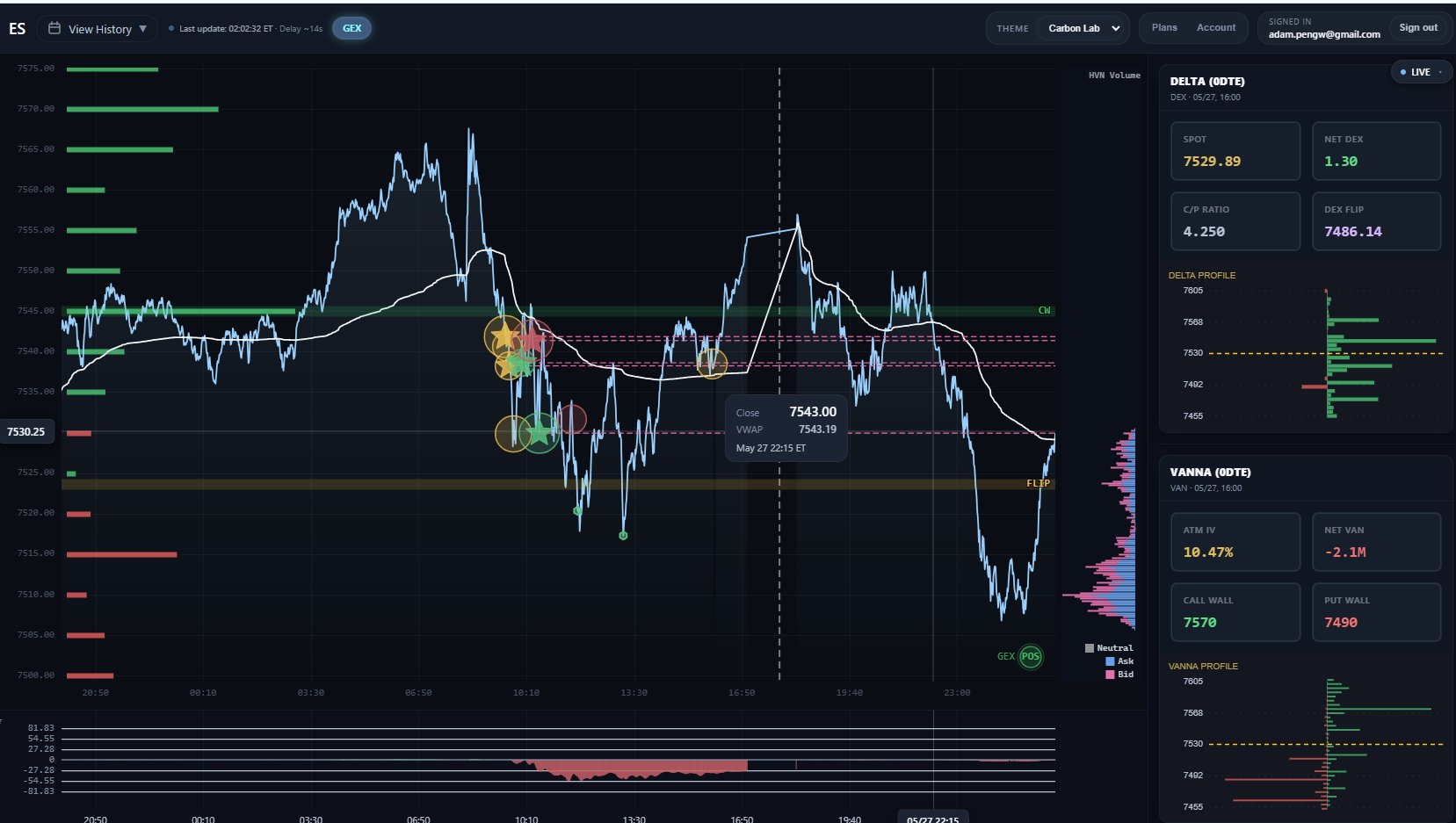
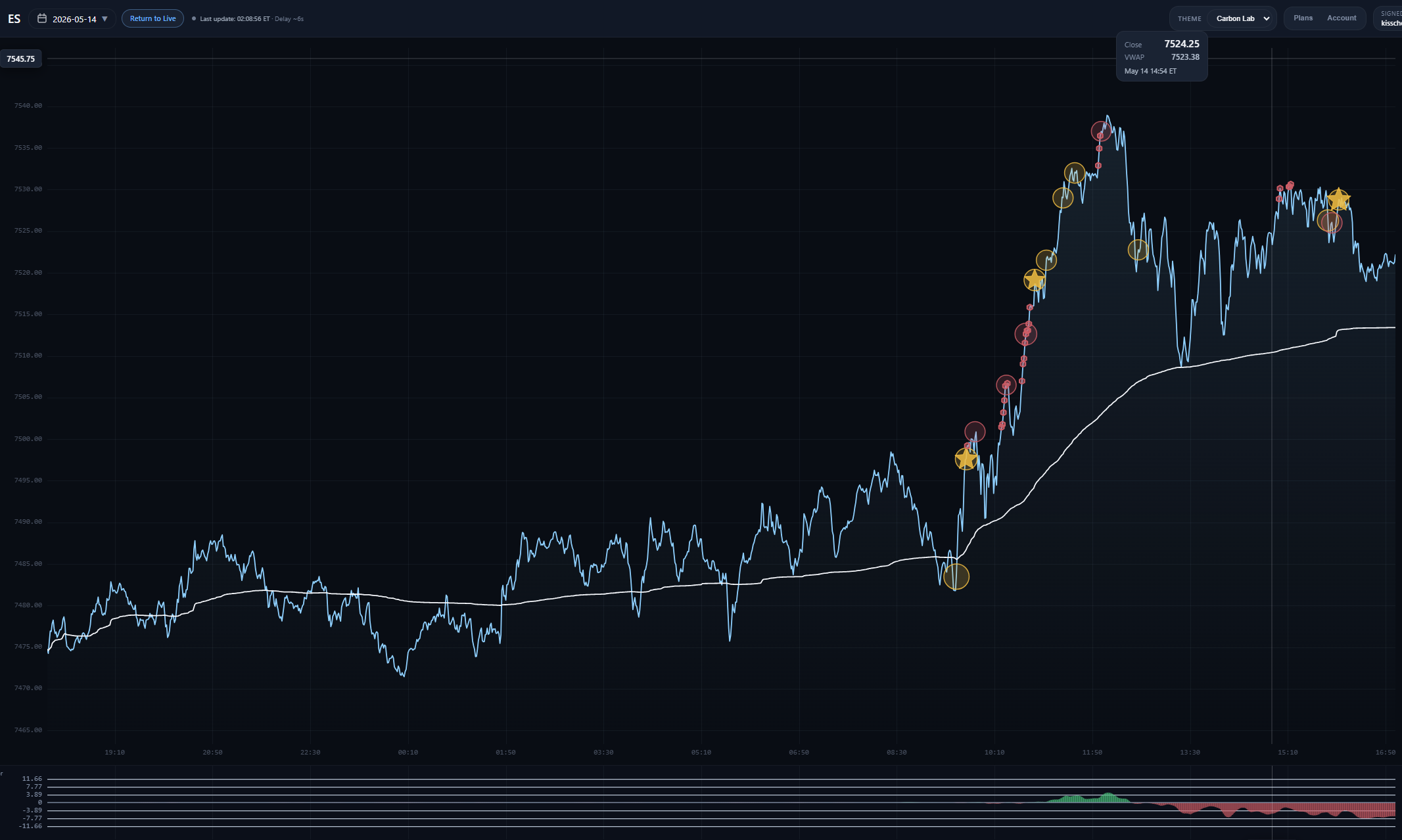
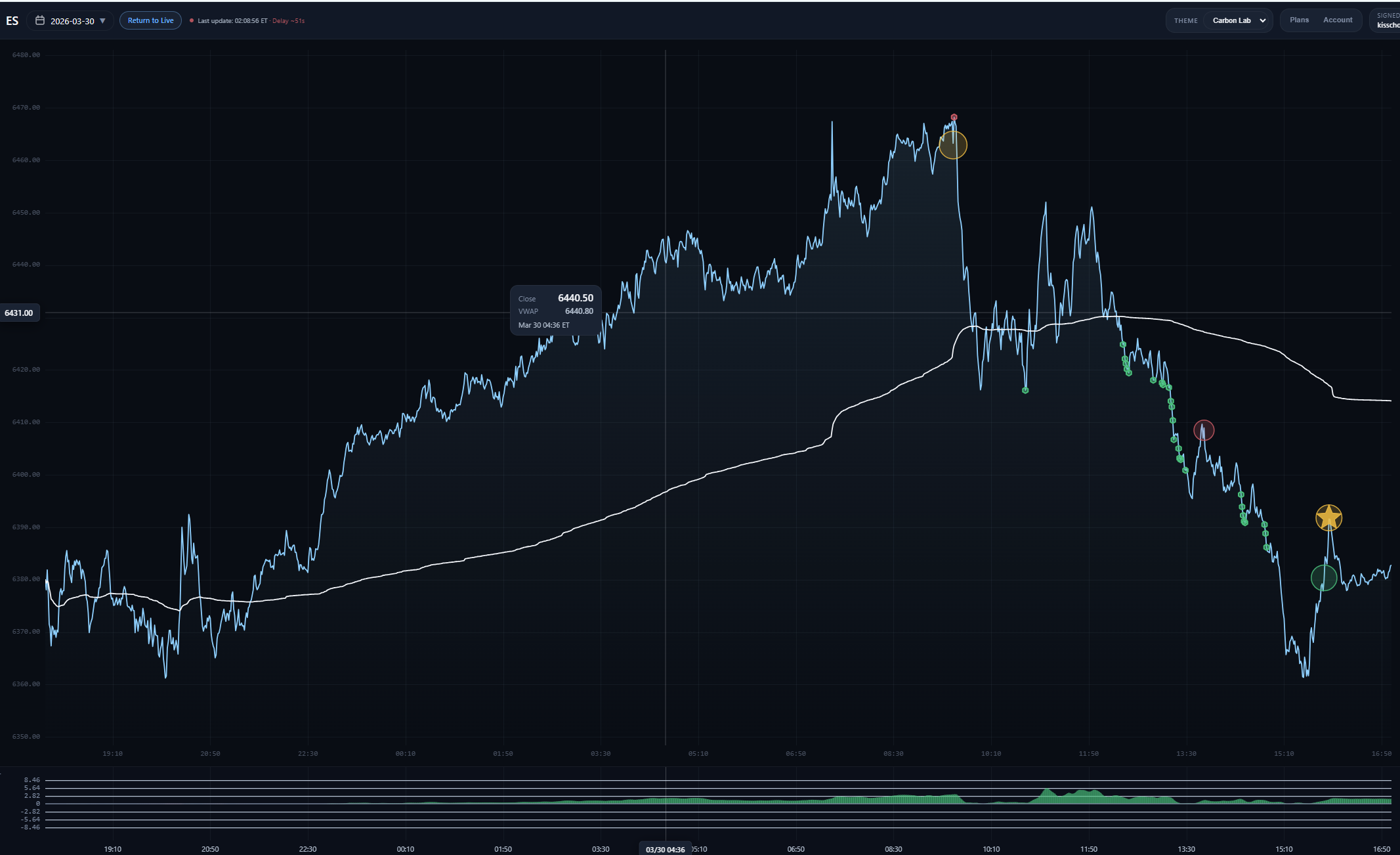
A circle marks a large trade; a star marks a huge trade. Star-level trades tend to build strong support or resistance at that price over the next day or two — so a support / resistance line is extended out from them.
Marker Colors
The color of a marker tells you what the activity represents:
Red = take-profit on longs. Green = take-profit on shorts. Yellow = a trend continuing, ending, or even reversing.
Hexagons
A hexagon represents an algorithm-driven take-profit. Red means take-profit on longs; green means take-profit on shorts.
The Sun
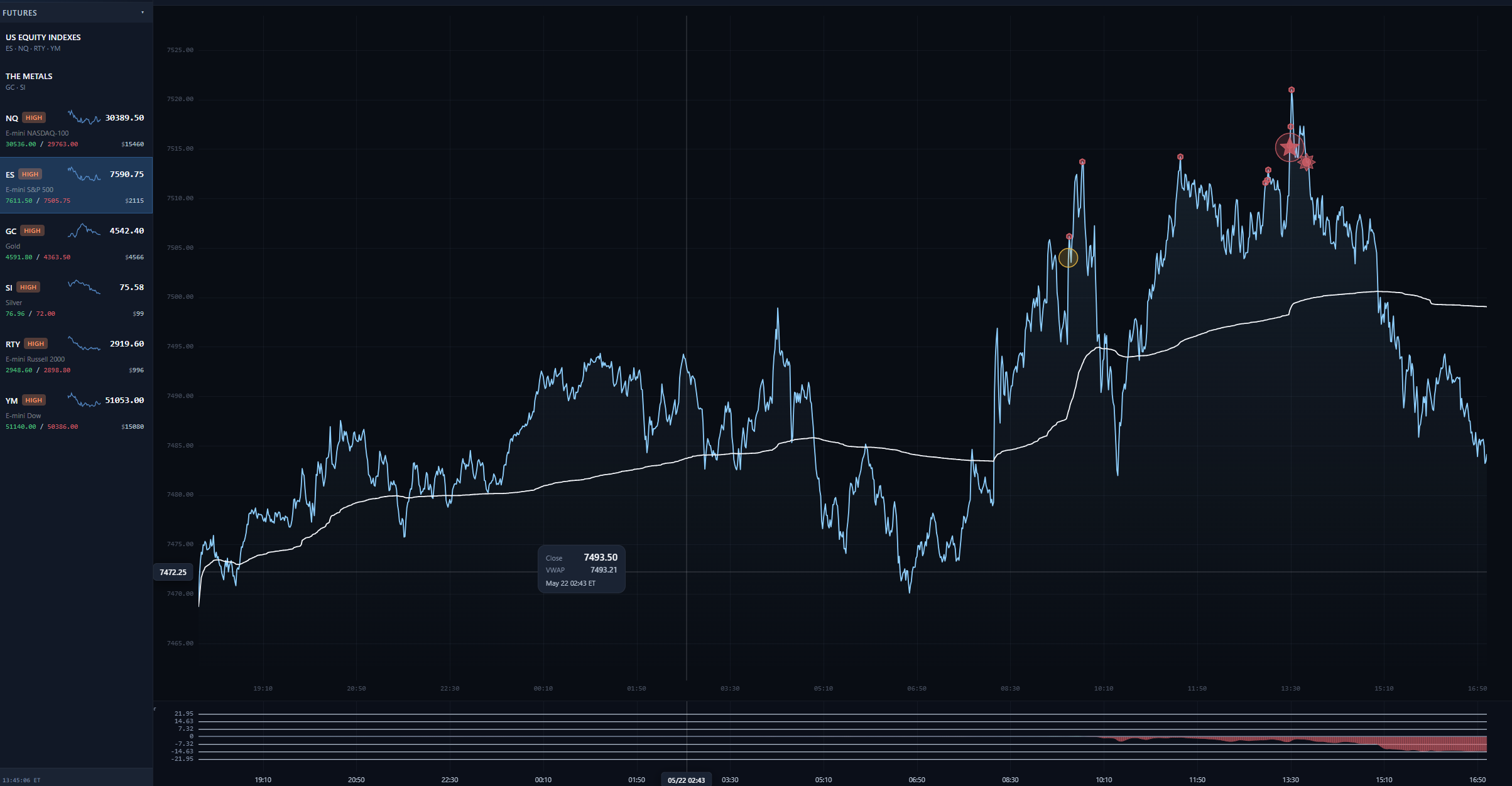
A Sun marks a powerful resistance to the prevailing trend — a level where momentum runs into a wall. It frequently stalls the move outright, or flips it into a full reversal. Treat a Sun as a warning that the current push is meeting heavy opposition and may be about to terminate.
The Sun is most powerful in confluence. When it appears together with Circles and Stars at the same area, the probability of the trend terminating or reversing there increases dramatically. A lone Sun is a caution flag — but Sun + Circle + Star stacked at one level is a high-conviction reversal zone worth acting on.
XJER Indicator
The XJER Indicator measures the current balance of buying vs. selling energy in the market. Watch its color transitions:
When XJER disagrees with price
One of the most reliable ways to trade XJER is to watch for divergence between the indicator and price, especially inside a sideways / range-bound market. When price refuses to break in one direction while XJER's energy is quietly draining the other way, the odds of a reversal rise sharply — the move that looks dominant is actually running out of fuel.
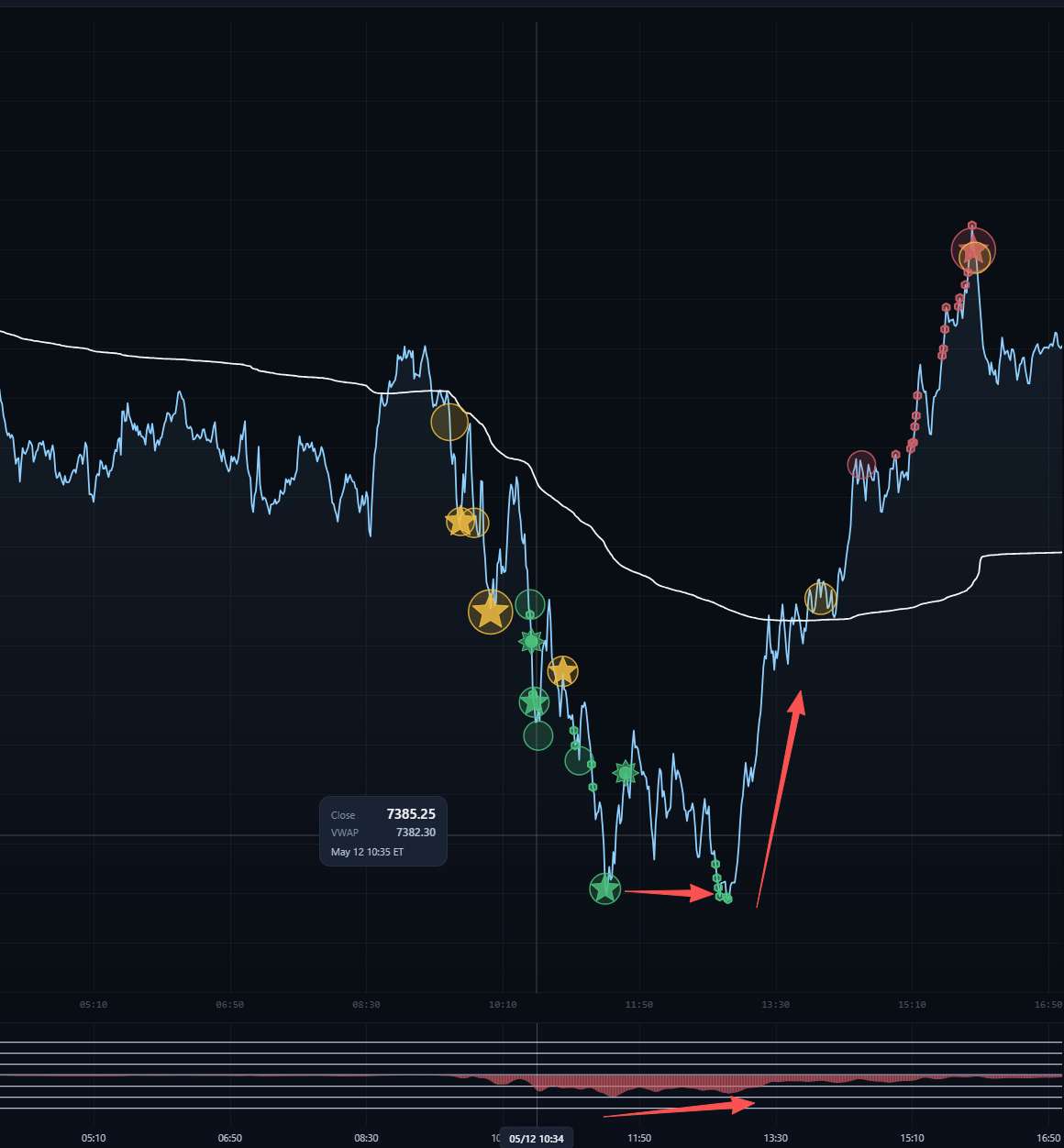
The same logic scales to higher timeframes:
In short: price tells you where the market is — XJER tells you whether that move is still being funded. When the two disagree, respect the energy.
DEX — Delta Exposure
What DEX measures
DEX measures the notional hedging position that options dealers must take in the futures / underlying market to stay delta-neutral as the underlying price moves.
GEX — Gamma Exposure
The Gravity Compass
GEX is the single most important "gravity compass" in derivatives microstructure. It shows how fast dealers must adjust their Delta for every 1% move in the underlying. The GEX bars (green / red on the main chart's left edge and the right sub-panel) pinpoint the "gravity zones" (support) and "repulsion zones" (resistance).
VANNA — Volatility Exposure
The 0DTE Melt-Up Catcher
VANNA measures how sensitive dealers' hedges are to changes in implied volatility (IV) — the second derivative of price with respect to IV. In the 0DTE era, it's the ultimate weapon for catching late-session "melt-ups" or "flash crashes."
When price rises while IV falls (as in the chart's ATM IV dynamics), a positive NET VANNA forces dealers to keep adding buy-side hedges like an "invisible hand," driving a pulse-like surge with no warning.
Call Wall
The Intraday Bulls' Ceiling
The Call strike with the largest open interest (OI) or Gamma exposure across the entire market.
In practice: unless there's an extremely strong macro catalyst or dealers get caught in a negative-Gamma squeeze, when price touches the Call Wall dealers close out heavily or set up reverse hedges, creating strong selling pressure and a magnetic pull back down (matching the CW resistance behavior in the chart).
Put Wall
The Bulls' Maginot Line
The Put strike with the largest open interest (OI) or Gamma exposure across the entire market.
In practice: when price falls toward the Put Wall, dealers' hedges generate powerful buy-side support. But once that level is broken on heavy volume intraday, dealers — to protect themselves — are forced to frantically sell futures to hedge, triggering an all-out avalanche.
FLIP — The Bull/Bear Divide
The critical price at which the market switches from a "positive Gamma / Delta regime" to a "negative Gamma / Delta regime" (shown on the right panel). It's the intraday trader's "weather forecast."
Volume Profile
The Volume Profile on the right edge of the chart shows where the session's volume traded — not when. Each horizontal bar measures how much size changed hands at that price, split by whether it printed on the Ask (aggressive buyers) or the Bid (aggressive sellers). Long bars are High-Volume Nodes (HVN) — magnets that tend to act as support / resistance; thin gaps are Low-Volume Nodes (LVN) that price slices straight through.
POC, HVN & LVN
The POC (gold) is the single price with the most volume — the day's fair-value anchor that price keeps gravitating back to. The shaded Value Area holds 70% of volume; its edges (VAH / VAL) are natural fade levels, while thin LVN gaps are where moves accelerate.
Who is in control
A bar dominated by blue Ask means buyers lifted the offer there — demand. Pink Bid means sellers hit the bid — supply. Persistent Ask-heavy nodes below price signal accumulation; Bid-heavy nodes above signal distribution. The corner tally shows the net session imbalance.
Trading Tips
Single signals fire all day long. The ones that actually mark a turn share one trait: confluence. Before fading a move and betting on a reversal, look for one of the two confirmations below.
Cross-instrument resonance
The four equity-index futures · ES, NQ, RTY, YM · are driven by the same macro flow. When Stars, Circles, or Suns fire on several of them at the same time and against the same structure (for example all tagging a recent high or the Call Wall together), that synchronized signal carries far more weight than the same marker on a single instrument. Aligned signals across instruments mean a much higher-probability reversal.
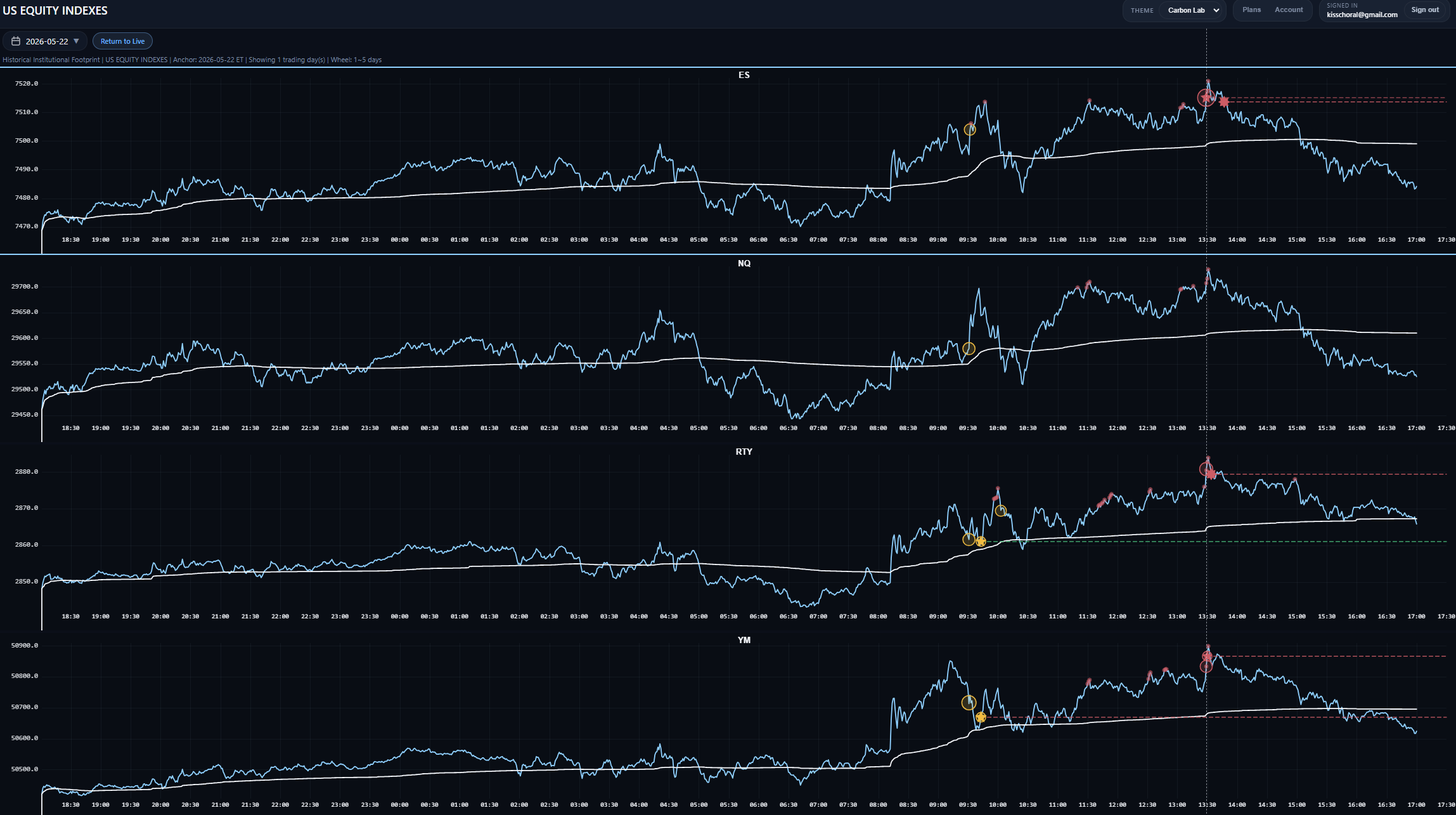
Multi-signal confluence at a level
Even more powerful than one big signal: different signal types stacking at the same price level. Watch for combinations like a Star or Circle firing right at the Call Wall or Put Wall; markers (Stars / Circles / Hexagons / Suns) clustering at a VWAP-derived S/R line; or a Sun overlapping with a Hexagon cluster at a recent extreme. When two or three signal types flag the same price, the level matters — the more types stack, the stronger the reaction.
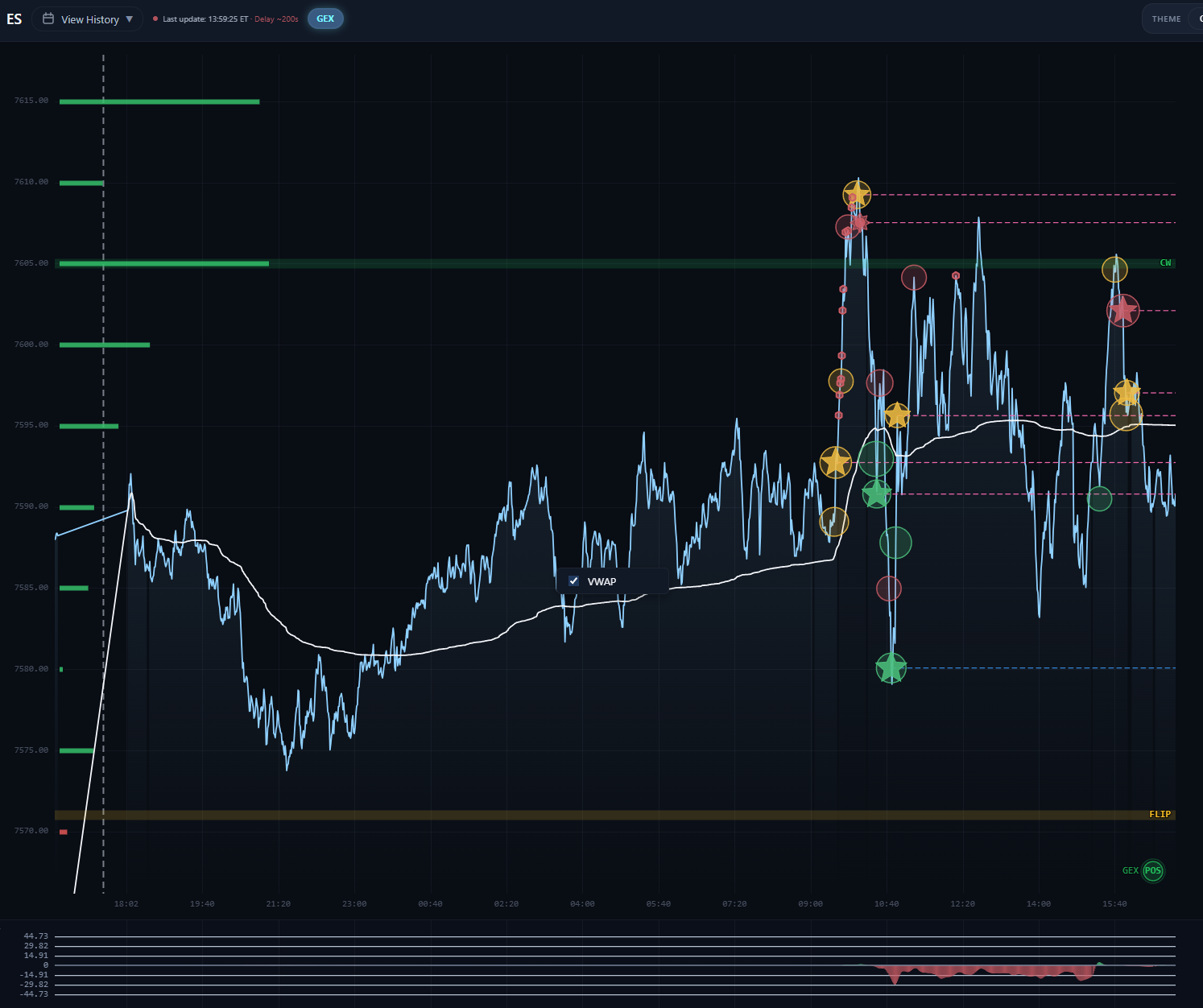
XJER divergence in a range
While price chops sideways, watch the XJER Indicator. If price holds its range (or makes only a marginal new extreme) but the dominant XJER energy is contracting · selling energy shrinking under a flat or low price, or buying energy shrinking under a flat or high price · the side in control is exhausting. That divergence sharply raises the odds of a reversal.
Note: not every reversal is preceded by an XJER divergence · plenty of turns happen without one. The point is the inverse: when a divergence does appear, the probability of a reversal is materially higher. Treat it as a confidence-booster, not a prerequisite.
Best case: every condition aligns · multi-signal confluence at a key level, synchronized markers across ES / NQ / RTY / YM, and an XJER divergence on the leading instrument. That is the highest-conviction reversal setup on the board.
End-of-day XJER divergence (next-day reversal)
Scale the same divergence idea up to the daily close. When the cash session closes at the upper end of the day's range but the XJER Indicator still shows red selling energy in control, demand was overrun in the final hour · the move higher was distributed into, not bought. The opposite is just as powerful: a close at the lower end of the range with green buying energy dominant in XJER means sellers were absorbed on the way down. Either configuration sharply raises the odds of a reversal at the next session's open.